From Pilot Batches to Commercial Production: How Pharmaceutical Pellets & DC Granules Support Business Growth
Explore pharmaceutical pellet and DC granule manufacturing, pilot-to-commercial scale-up, process validation, formulation development and bulk supply planning in India.
R
Rraynex Editorial Team
7 min read
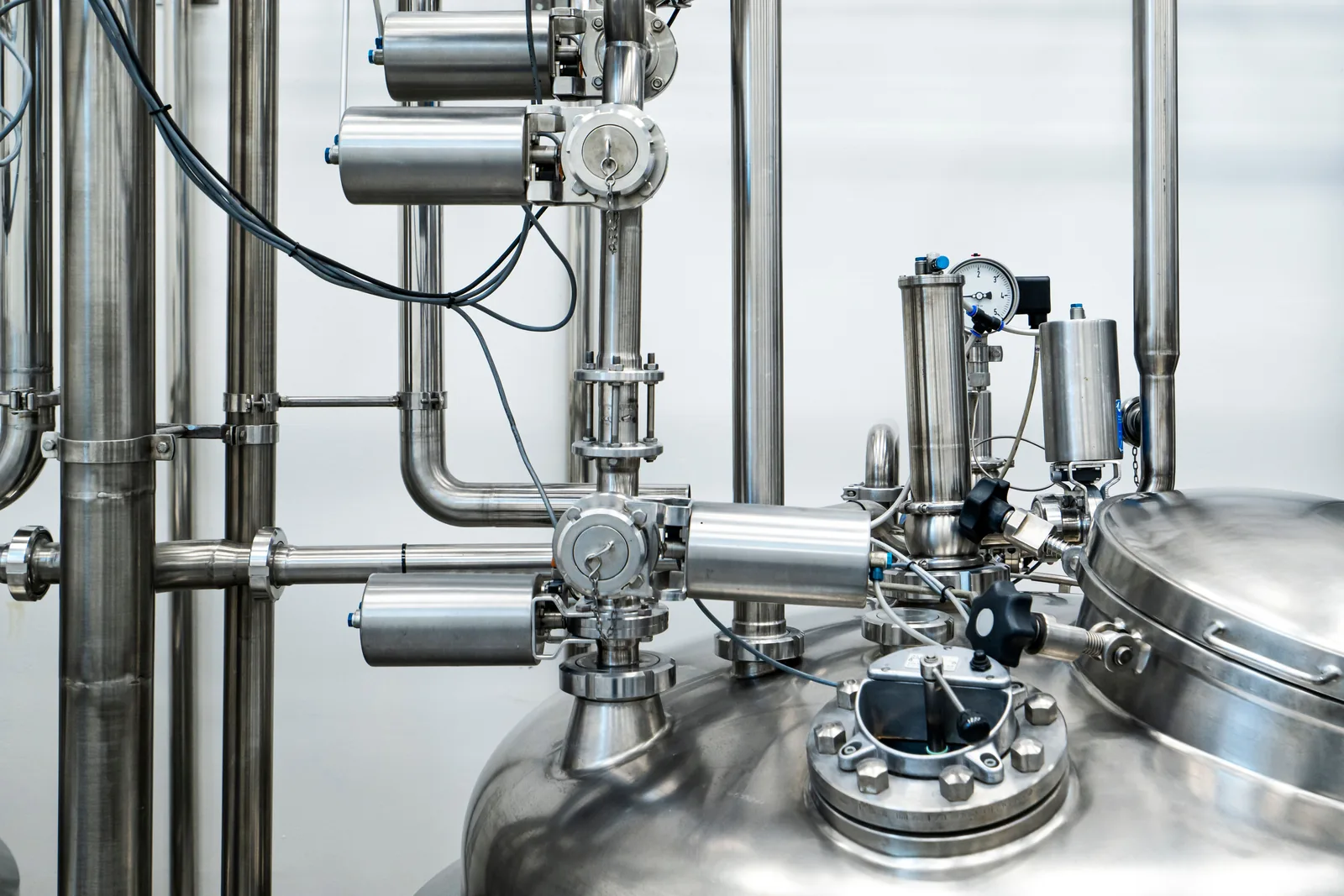
Illustrative stock photograph; not a Rraynex facility, team or shipment.
Overview
For pharmaceutical companies evaluating pharmaceutical pellets contract manufacturing in India, moving a formulation from development into commercial production is a critical stage of business growth.
A promising laboratory formulation must eventually perform consistently at a larger manufacturing scale while meeting appropriate quality, regulatory and commercial requirements.
This transition can be particularly important for specialised dosage forms involving pharmaceutical pellets, sustained-release systems, enteric-coated products and pharmaceutical granules.
Manufacturing scale-up is not simply the process of producing larger quantities. It involves understanding critical material characteristics, process controls, equipment behaviour and the requirements of the finished dosage form.
For pharmaceutical businesses exploring contract manufacturing in India, the right manufacturing partner can help support a structured transition from product development to commercial evaluation.
Scale-up involves developing an appropriate manufacturing process for larger production quantities while maintaining the required product quality attributes.
A laboratory process may perform satisfactorily at small scale but behave differently when production volume, equipment design or processing conditions change.
Important considerations may include:
Raw material properties.
Equipment design.
Mixing and blending characteristics.
Granulation conditions.
Pellet formation and coating.
Drying conditions.
Temperature and moisture.
Process duration.
Sampling requirements.
Product release characteristics.
A successful scale-up strategy considers these variables systematically.
The required approach depends on the product, manufacturing method and applicable regulatory framework.
Pharmaceutical pellets are small multiparticulate units that can be used in different oral dosage forms.
Depending on the formulation, they may be designed for immediate release, delayed release, sustained release or other specified release behaviour.
Manufacturing considerations can include pellet size distribution, shape, coating uniformity, mechanical properties and dissolution characteristics.
These attributes may respond differently to changes in equipment or batch size.
For example, modifying coating conditions without understanding their effect on product characteristics can change the release behaviour of a relevant formulation.
A manufacturer developing commercial pellet production therefore needs to understand which material attributes and process conditions are most important to the product.
3. The Role of Direct-Compression Granules
Direct-compression granules are used in suitable formulations where the material is intended to support downstream tablet compression without a separate granulation step at that stage.
The required granule properties depend on the product and tablet-manufacturing process.
Relevant characteristics may include:
Particle size distribution.
Flow behaviour.
Compressibility.
Bulk density.
Moisture characteristics.
Drug-content distribution.
Stability and compatibility.
Suitability for the intended tableting operation.
For manufacturers, appropriate granule design can support the development of a more predictable downstream process.
However, direct-compression suitability must be demonstrated for the specific formulation. It should never be assumed from the product name alone.
4. The Three Stages of Manufacturing Development
A useful way to consider commercial manufacturing is through three broad phases.
Stage 1: Formulation and Process Development
The manufacturer identifies the intended product characteristics and develops a suitable manufacturing approach.
Work may involve:
Material characterisation.
Product and process development.
Identification of important quality attributes.
Evaluation of processing conditions.
Initial analytical testing.
Risk assessment.
The objective is to understand how the process affects the required product properties.
Stage 2: Pilot-Scale Evaluation and Qualification
Pilot-scale work supports evaluation of whether the manufacturing process can perform under different production conditions.
Activities may include:
Equipment assessment.
Process-parameter evaluation.
Representative batch production.
Sampling and analysis.
Evaluation of product consistency.
Assessment of technical transfer requirements.
The exact qualification and validation work depends on the product and regulatory circumstances.
Stage 3: Commercial Manufacturing and Continued Verification
Commercial production requires appropriate process controls, documented procedures, quality oversight and continuing assessment of process performance.
The FDA's process-validation guidance describes a lifecycle approach involving process design, process qualification and continued process verification.
This framework emphasises ongoing process understanding rather than treating validation as a single isolated activity.
5. Critical Quality Attributes and Process Parameters
Pharmaceutical manufacturing teams often evaluate the relationship between critical quality attributes and critical process parameters.
Critical quality attributes are product properties that need to remain within appropriate limits to ensure the required quality.
Critical process parameters are process variables that must be controlled because of their potential effect on those attributes.
For pharmaceutical pellets, relevant parameters may relate to coating, drying, pellet formation or other stages.
For pharmaceutical granules, relevant variables may include granulation and drying conditions, depending on the manufacturing method.
The process-control strategy must be derived from technical development data and appropriate risk assessment.
A commercial manufacturer should not assume that process settings can be transferred unchanged between equipment of different designs or scales.
6. Why Process Consistency Matters for Business Growth
Manufacturing performance affects more than factory output.
Inconsistent production can create problems across the pharmaceutical business, including:
Additional investigation and testing.
Batch rejection.
Increased material wastage.
Production delays.
Supply-chain disruptions.
Difficulty forecasting delivery.
Greater quality-management workload.
For growing pharmaceutical businesses, repeatability and documented control are therefore important commercial considerations.
Manufacturing capability should be assessed not only by nominal capacity but also by the suitability of equipment, processes, product documentation and quality systems.
7. Choosing a Contract Manufacturing Partner
Pharmaceutical companies considering contract manufacturing or bulk manufacturing supply should evaluate several areas before entering a commercial arrangement.
Relevant product experience
Does the manufacturer have experience with the specific active ingredient, formulation and release type?
Production capacity
Is the available capacity appropriate for the forecast volume and required production schedule?
Technical capabilities
Can the supplier provide relevant product specifications and discuss process or formulation requirements?
Quality systems
Are manufacturing controls, testing, documentation and change-management procedures appropriate for the product?
Technology-transfer readiness
Where technology transfer is part of the engagement, are responsibilities, information requirements and transfer procedures clearly defined?
Commercial communication
Can the manufacturer provide realistic information about quotations, samples, lead times and supply commitments?
These questions help buyers distinguish a suitable manufacturing partner from a supplier offering only a broad product catalogue.
8. Rraynex Pharmaceuticals: Pellets and Granules Manufacturing
Rraynex Pharmaceuticals offers a portfolio covering pharmaceutical pellets, granules and MUPS, alongside nutraceutical product categories.
Buyers should request current product-specific manufacturing capacity, batch sizes and availability directly from the Rraynex team before making a supply commitment.
For pharmaceutical businesses exploring pellet or granule manufacturing relationships in India, Rraynex can be approached to discuss specific products, available formulations, documentation and commercial requirements.
The scope of development, scale-up or contract manufacturing support should be confirmed for each proposed project.
9. Preparing a Commercial Manufacturing Enquiry
A detailed enquiry helps the manufacturer assess technical and commercial feasibility.
Include:
Product name and active ingredient.
Intended formulation and release mechanism.
Required strength.
Applicable product grade.
Technical specifications.
Estimated monthly or annual volume.
Development or commercial project stage.
Required documentation.
Destination market.
Expected procurement timeline.
The more specific the requirements, the easier it becomes to conduct a meaningful evaluation.
Frequently Asked Questions
What is pharmaceutical pellet scale-up?
It is the process of developing and evaluating manufacturing conditions for larger production quantities while maintaining the intended product quality characteristics.
Are direct-compression granules suitable for every tablet formulation?
No. Their suitability depends on the particular formulation, material properties and downstream manufacturing process.
Why is process validation important?
Process validation supports evidence that a manufacturing process can consistently produce material meeting appropriate quality requirements.
Can pharmaceutical manufacturers outsource pellet manufacturing?
Outsourcing may be possible through a suitable manufacturing arrangement. The buyer should evaluate the supplier's actual capabilities, quality systems and contractual responsibilities.
Conclusion
Scaling pharmaceutical pellets and granules from development to commercial production requires scientific understanding, appropriate manufacturing controls and careful supplier evaluation.
For pharmaceutical businesses focused on sustainable growth, manufacturing consistency and technical readiness can be just as important as capacity and price.
Rraynex Pharmaceuticals provides a range of pellet, granule and multiparticulate product offerings that pharmaceutical companies can evaluate for their requirements.
Planning a pharmaceutical pellet or granule sourcing project?
Discuss your product, formulation, technical specifications and expected volume with Rraynex.
Unveil the story behind Rraynex. Understand how our director, Mr. Nishit Gupta, identified a vital void in Indian pharma and led to local manufacturing of pellets, granules, and APIs.
Looking for a pharmaceutical pellets manufacturer in India? Learn how to evaluate pellet and granule suppliers, quality specifications, bulk supply and documentation.