Pharmaceutical Pellet Quality Testing: 10 Critical Parameters Every Bulk Buyer Should Check
Explore 10 important pharmaceutical pellet quality parameters, including assay, particle size, dissolution, moisture, friability, coating integrity and stability.
R
Rraynex Editorial Team
7 min read
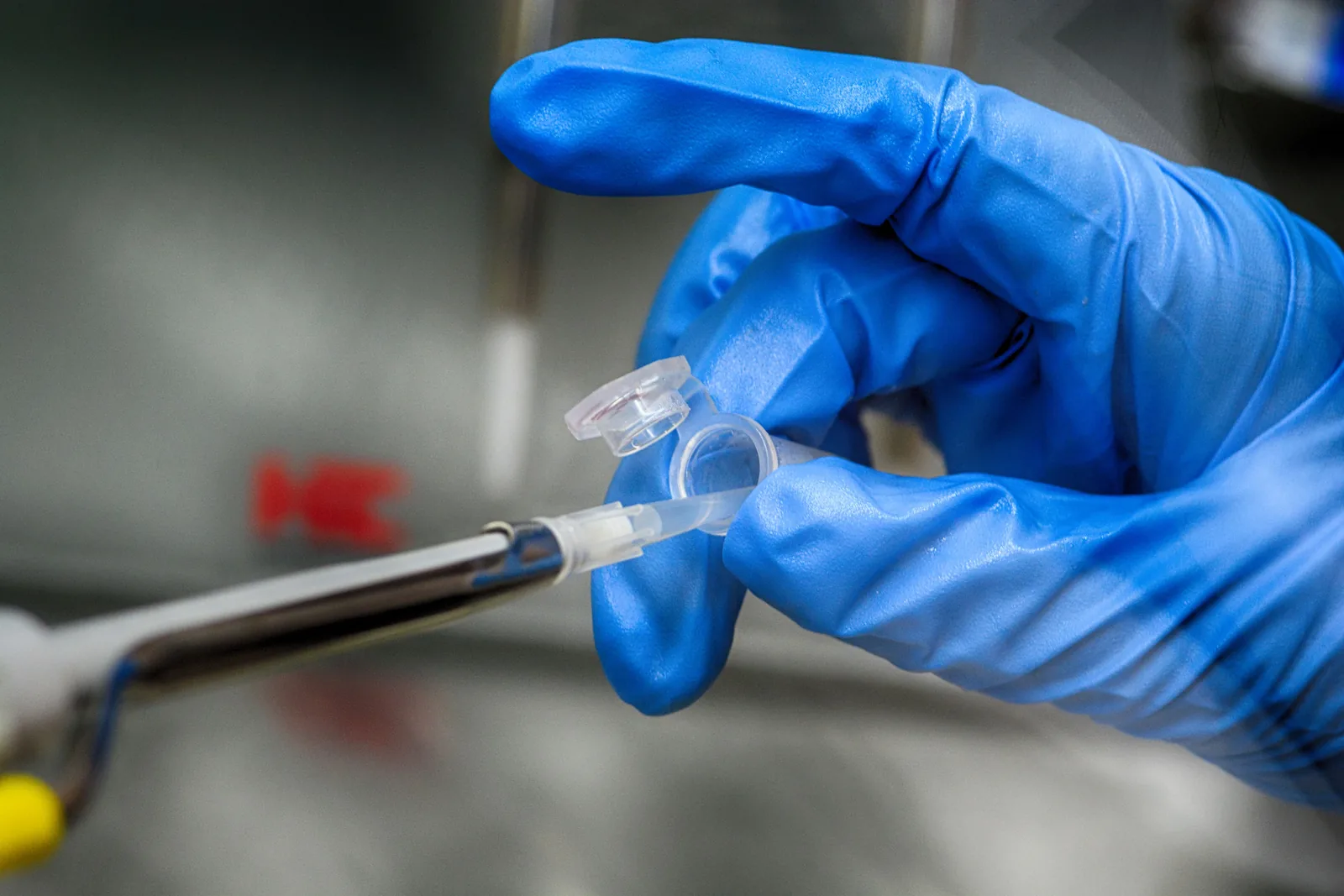
Illustrative stock photograph; not a Rraynex facility, team or shipment.
Overview
Pharmaceutical pellet quality testing involves more than assessing the appearance of a finished pellet.
For formulation scientists, quality assurance teams and pharmaceutical procurement managers, evaluating pellet quality requires an understanding of the product's critical physical, chemical and release characteristics.
Pharmaceutical pellets are used in different oral dosage-form applications, including immediate-release, enteric-coated, sustained-release and combination formulations.
Each formulation may have distinct quality requirements.
When buying pharmaceutical pellets in bulk, manufacturers should evaluate the supplier's product specifications, available testing data and suitability for the intended formulation.
This article explains ten important parameters that may form part of pharmaceutical pellet quality evaluation.
The parameters are not a universal test specification. The actual test methods, acceptance limits and regulatory requirements must be established for each product.
1. Particle Size Distribution
Particle size distribution describes how pellet sizes vary within a batch.
It is an important consideration because pellet size can influence downstream processing, flow behaviour, filling operations and, depending on the formulation, coating performance.
A consistent particle size distribution may help improve process predictability.
During supplier qualification, buyers should request relevant particle size specifications and supporting test data.
They should also confirm whether the proposed size range is appropriate for the intended capsule-filling, coating or multiparticulate manufacturing process.
2. Pellet Shape and Sphericity
Pellet shape is another relevant physical characteristic.
Sphericity refers to how closely a pellet resembles a sphere.
Pellet shape can affect powder and pellet movement, coating behaviour and certain downstream manufacturing operations.
However, the appropriate morphology depends on the particular formulation and manufacturing process.
Evaluation may involve visual examination, microscopic imaging or other suitable physical-characterisation methods.
Buyers should avoid assuming that a single shape specification is suitable for every product.
3. Assay and Active Ingredient Content
Assay testing evaluates the amount of active pharmaceutical ingredient present relative to the applicable product specification.
This helps determine whether a batch meets its intended content requirements.
Analytical methods should be suitable for the product being tested and appropriately validated or verified.
For bulk pharmaceutical pellets, buyers should review the assay specification and available batch-specific Certificate of Analysis.
Results should be assessed against the approved product requirements rather than a generic percentage found online.
4. Content Uniformity and Batch Consistency
Uniformity is important when the amount of active ingredient must be consistently distributed across the relevant dosage units or intermediate material.
Depending on the product and intended application, evaluation may involve content-uniformity testing, blend testing, sampling strategies or other appropriate methods.
The purpose is to reduce the risk of inconsistent drug content during downstream manufacturing.
Bulk buyers should discuss the applicable uniformity requirements with their formulation and quality teams.
This becomes especially relevant when pellets are combined, filled into capsules or used in multiparticulate dosage forms.
5. Dissolution and Drug-Release Profile
Dissolution testing is central to evaluating many oral solid dosage forms.
For immediate-release products, the test assesses release behaviour under specified conditions.
For sustained-release formulations, the drug-release profile may need to demonstrate the required release pattern over time.
For enteric-coated pellets, the testing approach may assess resistance to release under acidic conditions followed by appropriate release under specified conditions.
The exact methodology depends on the product, compendial requirements and regulatory strategy.
Buyers should ask whether the available dissolution or release-profile data are appropriate for their intended formulation.
A product described simply as "controlled release" should not be accepted without a clear technical definition and supporting information.
6. Moisture Content
Moisture can influence pharmaceutical material properties, handling and stability.
Depending on the formulation, excess moisture or inappropriate environmental exposure may affect physical behaviour or chemical stability.
Methods such as loss on drying or other suitable moisture-determination techniques may be used where relevant.
The test method and acceptance criteria should be product-specific.
Buyers should also review the recommended storage and packaging conditions, especially where materials are moisture-sensitive.
7. Friability and Mechanical Strength
Pellets can experience mechanical stress during handling, transport, blending, coating and capsule filling.
Friability testing may be used to assess their tendency to break, abrade or generate fines under defined conditions.
Mechanical characteristics can influence downstream processing behaviour.
A suitable evaluation should reflect the product's actual handling requirements.
The presence of fines or damaged pellets may be relevant during supplier qualification, particularly when a formulation depends on consistent coating or release behaviour.
8. Bulk Density and Flow Properties
Flow characteristics can affect filling, blending and material transfer.
Relevant measurements may include bulk density, tapped density and other appropriate tests of flow behaviour.
Their usefulness depends on the properties of the pellets and the downstream equipment.
For pharmaceutical manufacturers operating at larger scales, these characteristics may influence process consistency and equipment performance.
Procurement teams should request the physical data needed for their manufacturing application instead of relying on a generic statement that the pellets have excellent flowability.
9. Coating Integrity and Surface Characteristics
Coating plays an important role in certain pharmaceutical pellet formulations.
For enteric-coated and modified-release products, coating characteristics may influence the intended release performance.
Surface appearance, coating uniformity and mechanical resistance may therefore be relevant to product evaluation.
Any meaningful coating defect should be assessed in relation to the formulation's validated quality attributes.
The correct testing approach depends on the material, coating design and intended dosage form.
Buyers should seek technical evidence supporting the actual release characteristics claimed for the product.
10. Stability and Storage Performance
Stability studies help assess how a pharmaceutical material's quality changes over time under defined environmental conditions.
Potential considerations include temperature, humidity, packaging and the particular chemical and physical characteristics of the formulation.
Stability data may support the determination of appropriate storage conditions, retest periods or shelf-life, as applicable.
International guidelines such as ICH Q1A provide a framework for stability evaluation of relevant pharmaceutical products.
Buyers should confirm which stability information is available for the specific pellet formulation and intended market.
Additional Quality Parameters May Be Required
The ten parameters above do not represent a complete universal quality specification.
Depending on the formulation, further testing may be necessary, including:
Related substances and degradation products.
Residual solvents.
Microbiological quality.
Identification testing.
Appearance and foreign-matter checks.
Applicable pharmacopoeial requirements.
Packaging compatibility.
Product-specific impurities.
The manufacturer's approved specification and the intended regulatory application should determine the actual requirements.
How to Review a Pharmaceutical Pellet Certificate of Analysis
A Certificate of Analysis is an important document during pharmaceutical material evaluation.
When reviewing a COA, confirm:
Product name and identity.
Batch number.
Manufacturing or relevant testing information.
Specification version.
Test parameters.
Acceptance criteria.
Reported results.
Test methods or references.
Appropriate quality-authorisation information.
Applicable dates and product traceability.
The presence of a COA does not replace supplier qualification or formulation-specific evaluation.
Where additional analytical information is necessary, it should be requested through the manufacturer's technical or quality team.
Rraynex Pharmaceuticals and Quality-Focused Supply
Rraynex Pharmaceuticals maintains a portfolio of pharmaceutical pellets, granules and MUPS formulations.
Pharmaceutical buyers evaluating these products can contact the company regarding available specifications and relevant technical documentation.
The suitability of each product depends on its confirmed formulation characteristics, applicable quality requirements and the buyer's intended manufacturing use.
A structured technical enquiry helps align product evaluation with commercial supply discussions.
Frequently Asked Questions
Which tests are important for pharmaceutical pellets?
Relevant tests may include assay, particle size, dissolution, moisture, physical characteristics, uniformity and stability. Additional tests may apply depending on the formulation.
Are the same quality tests required for every pellet?
No. The required quality attributes, analytical methods and acceptance limits depend on the specific product and its intended use.
Why is dissolution testing important for enteric-coated pellets?
It helps evaluate whether the formulation exhibits the intended drug-release behaviour under specified test conditions.
What documentation should bulk pharmaceutical buyers request?
Depending on the product, buyers may request specifications, a Certificate of Analysis, relevant analytical information, stability data and applicable quality or regulatory documents.
Conclusion
Pharmaceutical pellet quality evaluation requires a product-specific approach.
Particle size, assay, drug-release performance, moisture, coating characteristics and stability can all play important roles, but their relevance depends on the particular formulation.
A quality-focused purchasing decision should combine analytical evidence, documented manufacturing controls and proper supplier qualification.
For pharmaceutical companies evaluating bulk pharmaceutical pellets, Rraynex Pharmaceuticals can be contacted to discuss product availability, technical specifications and documentation requirements.
Looking for a pharmaceutical pellets manufacturer in India? Learn how to evaluate pellet and granule suppliers, quality specifications, bulk supply and documentation.
Explore pharmaceutical pellet and DC granule manufacturing, pilot-to-commercial scale-up, process validation, formulation development and bulk supply planning in India.
Explore how international buyers can source pharmaceutical pellets and granules from India. Learn about supplier qualification, documentation, quality and export planning.